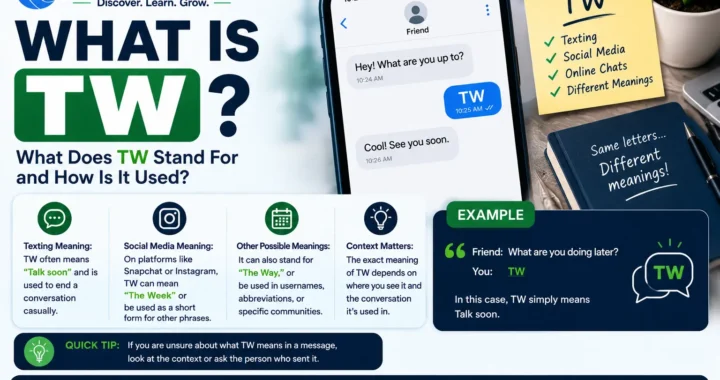

If you have seen the letters “SMH” in a text message or on social media, you might have wondered what they mean. SMH meaning is simple once you know it, but it can be confusing the first time you see it. This guide will explain SMH meaning in plain, easy words. We will also look at other slang words that show up a lot online, so parents and kids can understand what people are really saying.
By the end of this guide, you will know exactly what SMH means, how to use it, and what to do if you see other confusing slang online.
SMH stands for “shaking my head.” People use it to show they feel annoyed, disappointed, or surprised by something. It is one of the most common texting abbreviations used today, especially on social media.
Table of Contents
What Does SMH Mean?
SMH stands for “shaking my head.” People type it when they want to show they are unhappy, annoyed, or surprised about something. It is like typing a head-shake instead of actually shaking your head.
For example, if a friend tells you they forgot their homework again, you might reply “smh.” This means you are a little disappointed, but not really angry. It is a quick way to react without writing a full sentence.
SMH is one of many short texting abbreviations that people use to save time. It shows up in texts, social media comments, group chats, and even video captions.
Why Do People Use SMH?
People use SMH because it is fast and easy. Typing three letters is much quicker than writing “I can’t believe that happened” or “that is disappointing.” It also fits the fast, casual style of texting and social media.
SMH can be used in a few different ways:
- To show disappointment (“You forgot again? smh”)
- To show mild frustration (“Traffic again today, smh”)
- To react to something silly or funny (“He tripped over his own shoe, smh”)
The tone changes depending on the situation. Sometimes it is serious. Sometimes it is playful and joking.
What Does SMH Stand for in Text?
In text messages, SMH almost always stands for “shaking my head.” It is used the same way in texts as it is on social media. You will usually see it written in lowercase, like this: smh.
Here are a few real examples of how SMH is used in texting:
- “He said he’d be here at 5 and it’s already 6. smh”
- “smh, I studied all night and still forgot my calculator”
- “You ate the last slice? smh”
In each of these examples, the person is showing a small amount of frustration or disbelief, but usually in a light and not-too-serious way.
Is There Another Meaning for SMH?
Most of the time, SMH only means “shaking my head.” Like many short abbreviations, it can occasionally be used with a different meaning depending on who is using it and where. Context always matters. If you are ever unsure what an abbreviation means in a specific conversation, it is always okay to ask the person directly what they meant.
Read More: Divya Tanwar IAS Biography: Age, Rank, Family & Career
This is a good reminder for parents too. Slang changes fast, and new abbreviations pop up all the time. The best way to stay informed is to talk openly with kids about what they are seeing online, rather than trying to memorize every possible term.
Different Words, Same Meaning
SMH is not the only way people express this feeling online. Here are some other common abbreviations that mean something similar:
| Abbreviation | Meaning |
| SMDH | Shaking my darn head (a stronger version of SMH) |
| SMFH | Shaking my freaking head |
| FR | For real |
| NGL | Not gonna lie |
| IDK | I don’t know |
| TBH | To be honest |
These abbreviations are used the same way SMH is used: as a quick reaction in a text or comment. Learning a few of the most common ones can help parents understand conversations without needing to look up every single term.
Common Mistakes People Make
- Thinking SMH always means something negative. Sometimes it is just a light joke.
- Using it in formal writing, like school essays or work emails. It is only meant for casual texting.
- Assuming it always has one hidden meaning. Context is everything.
What Does “Caught in 4K” Mean? Slang Explained for Parents
Another popular phrase online is “caught in 4K.” This phrase means someone was caught doing something, usually on video or in a photo, with clear proof. “4K” refers to a very high-quality video resolution, so “caught in 4K” means there is no denying what happened because the evidence is so clear.
For example, if someone says they weren’t at a party, but a friend posts a video of them there, someone might comment “caught in 4K!” It is usually said in a joking, playful way among friends.
Knowing phrases like this can help parents understand what their kids are talking about online, and it opens the door for easy, low-pressure conversations about what kids are posting and sharing.
Average Screen Time for Teens: What Parents Should Know
Slang like SMH mostly shows up during time spent on phones, apps, and social media. This makes screen time an important topic for parents to understand.
Studies on teen screen habits have found that many teens spend several hours a day on their phones, much of it on social media and messaging apps. This is where most new slang terms are learned and used.
Expert tip: Instead of focusing only on the number of hours, many experts suggest looking at how screen time affects sleep, mood, and schoolwork. A teen who is on their phone for two hours but stays happy, social, and on top of homework may be doing just fine. A teen who seems more anxious, tired, or withdrawn after time online might benefit from a conversation about healthy screen habits.
Simple ways to build healthier screen habits include:
- Setting phone-free times, like during meals or before bed
- Talking about what apps and platforms your teen uses
- Encouraging offline hobbies and activities
- Keeping communication open instead of only restricting access
How Does the Internet Impact Young Boys?
The internet affects boys and girls in different ways. Research on this topic has found that young boys are especially likely to spend time in online spaces built around gaming, video content, and social media trends. These spaces can be a great way to connect with friends and explore hobbies, but they can also expose boys to content that isn’t a good match for their age.
Some things parents can watch for include:
- Sudden changes in language or new slang terms your child starts using
- New online friends or communities you don’t recognize
- Increased time spent alone online rather than with friends or family
- Content that promotes negative stereotypes, extreme views, or unhealthy comparisons
Expert tip: Staying curious instead of judgmental works best. Asking “What does that mean?” or “What is that app about?” opens conversations far better than reacting with alarm.
New Slang Words Parents Should Know
Beyond SMH, new slang appears online all the time. Here are a few examples parents may come across, explained simply:
- Rizz – A word used to describe someone’s charm or ability to flirt.
- No cap – Means “no lie” or “I’m being serious.”
- Bet – Means “okay” or “I agree.”
- Ghosted – When someone suddenly stops replying to messages with no explanation.
Some slang terms that show up online carry more sensitive, sexual meanings that are not appropriate to explain in detail here. If a parent comes across a word online they don’t recognize and are concerned about, the safest step is to search it using a trusted parental safety resource, or simply ask their child directly in a calm, open way. Staying curious and having ongoing conversations works far better than trying to memorize every new term as it appears.
Read More: Rauw Alejandro Height: Measuring the Reggaeton Singer’s Stature
Expert Tips for Staying on Top of Online Slang
- Ask your child what a word means instead of guessing.
- Use trusted, updated safety resources rather than random search results.
- Keep the conversation calm and judgment-free so kids feel comfortable talking to you.
- Remember that slang changes fast, so today’s list will look different next year.
Pros and Cons of Texting Abbreviations Like SMH
Pros:
- Saves time when texting
- Easy way to express a quick reaction
- Common and easy to learn once explained
Cons:
- Can be confusing for people who don’t know the term
- Not appropriate for formal writing
- Some abbreviations can have multiple meanings depending on context
FAQs
1. What does SMH mean in a text message? SMH means “shaking my head.” It shows disappointment, frustration, or surprise.
2. Is SMH always used negatively? No. It can be serious or playful, depending on the situation.
3. What does SMDH mean? SMDH means “shaking my darn head.” It is a stronger version of SMH.
4. Can SMH be used in schoolwork or emails? No, SMH is casual slang and should only be used in texting or informal chats.
5. What does “caught in 4K” mean? It means someone was caught doing something with clear video or photo proof.
6. Why do teens use so many abbreviations? Abbreviations save time and fit the fast pace of texting and social media.
7. How can I keep up with new slang my kids use? Ask them directly, stay curious, and check trusted parenting resources for updates.
8. Is SMH used the same way worldwide? Yes, SMH is widely recognized in English-speaking countries with the same general meaning.
Conclusion SMH meaning
SMH meaning comes down to one simple idea: shaking my head. It is a fast, casual way people show disappointment, surprise, or mild frustration in texts and online. Along with SMH, plenty of other abbreviations and slang terms show up in daily online conversations. Staying curious, asking questions, and keeping communication open are the best ways for parents and kids to understand each other’s online world together.